Cat Chewing on Paw: Causes, Signs & What to Do
Is your cat chewing on their paw? Learn the most common causes, from allergies to anxiety, and exactly when to call a vet. Expert guidance inside.
Jump to section
- Is It Normal Grooming or Something More?
- Common Causes of a Cat Chewing on Paw
- Allergies: The Most Frequent Culprit
- Foreign Objects and Physical Injury
- Parasites
- Infections: Bacterial and Fungal
- Anxiety and Compulsive Behavior
- Nail and Claw Problems
- How to Tell the Causes Apart: A Comparison
- What to Do When Your Cat Is Chewing on Their Paw
- Preventing Paw Problems Before They Start
- Getting a Fast Answer Without the Waiting Room
- Frequently Asked Questions
- Why is my cat chewing on their paw but there is nothing visibly wrong?
- Can I put anything on my cat's paw to help?
- How do I know if my cat's paw chewing is from food allergies?
- Is paw chewing a sign of anxiety in cats?
- When should I take my cat to the vet for paw chewing?
A cat chewing on their paw can look like ordinary grooming at first glance, but when it becomes frequent, focused, or intense, it's usually a signal that something is wrong. Whether the culprit is a hidden splinter, a developing allergy, or stress-driven compulsive behavior, understanding why your cat targets their paws, and what to do about it, can save them real discomfort and prevent a minor issue from becoming a serious one. This guide walks you through every major cause, how to tell them apart, and the most effective steps you can take right now.
Is It Normal Grooming or Something More?
Cats are meticulous self-groomers. According to research published in the Journal of Feline Medicine and Surgery, cats can spend approximately 25–30% of their time grooming, with some cats observed spending up to one-third of their waking hours on grooming behaviors. Paws are a natural part of that routine, cats lick and nibble their feet after eating, after using the litter box, and as part of general coat maintenance.
The concern begins when the behavior shifts in character. Normal grooming is brief, calm, and moves around the body. Problem chewing tends to be repetitive, focused on one or two paws, and accompanied by visible signs of irritation. If your cat returns to the same paw again and again, or you notice redness, swelling, hair loss, or broken skin, the behavior has crossed the line from grooming into something that needs attention.
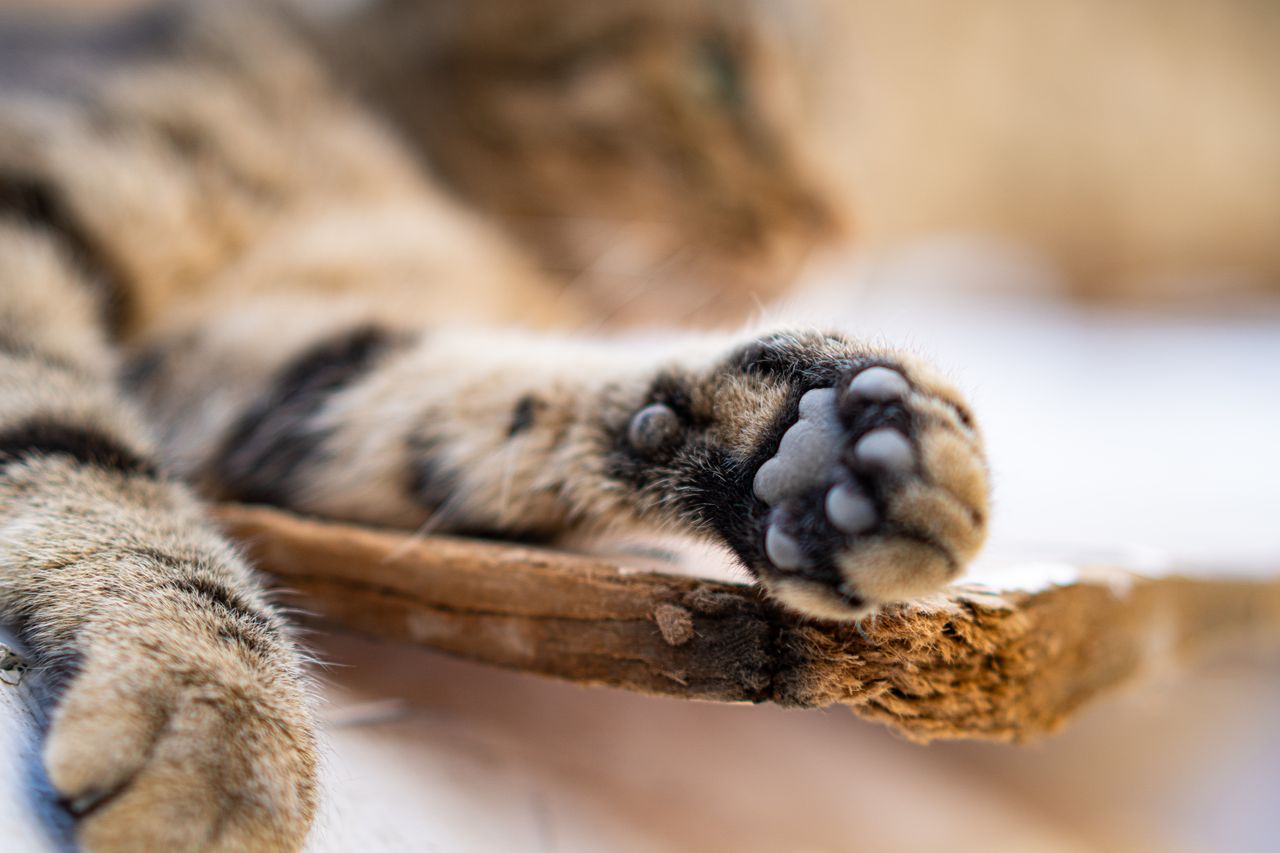
Key tip: Watch the paw itself, not just the behavior. Healthy paw skin should be smooth and pink (or pigmented). Raw, swollen, crusty, or discolored paw pads or skin between the toes are clear signals that something is causing irritation.
Common Causes of a Cat Chewing on Paw
There is rarely a single explanation for paw chewing. The causes range from straightforward physical problems to complex medical and behavioral conditions. Here are the most important ones to know.
Allergies: The Most Frequent Culprit
Allergies are one of the leading reasons a cat chews at their feet. They can develop in response to environmental triggers (dust mites, mold, pollen, certain fabrics), contact irritants (cleaning products on floors, scented litters), or food ingredients. A study of 1,407 cats with dermatologic diagnoses at Cornell University's teaching hospital found that allergies of all types combined accounted for 32.7% of all feline dermatoses. In other words, if your cat has a skin problem, there is roughly a one-in-three chance allergies are involved.
Food allergies deserve special mention because they are often overlooked. Published studies reviewed in PMC found that among cats with pruritus (itching), the prevalence of cutaneous adverse food reactions ranged from 12% to 21%. Common dietary triggers include beef, fish, chicken, and dairy. A cat who chews their paws year-round, rather than seasonally, is more likely to be reacting to something in their food than to outdoor allergens.
If your cat's skin issues are a recurring concern, it's worth reading about how allergic reactions manifest on skin, many of the same principles apply across species and can help you recognize patterns in your own pet.
Foreign Objects and Physical Injury
Cats walk on all sorts of surfaces, and small foreign objects, splinters, grass seeds, thorns, broken glass, or even dried debris, can lodge between the toes or embed in the paw pad. A cat's first instinct is to chew at whatever is bothering them, so sudden-onset paw chewing (particularly after outdoor time) should prompt a close physical inspection. Gently spread the toes and look for anything wedged in the skin folds or stuck in the pad itself. Minor wounds and cracked pads also cause localized chewing.
Parasites
Fleas, mites, and ringworm (a fungal infection, not an actual worm) can all trigger intense itching that a cat redirects toward their paws. Fleas tend to concentrate around the base of the tail and belly, but a heavily infested cat may chew at any accessible skin. Mange mites can affect the paws directly. If you notice tiny black specks (flea dirt) in the coat or scaly, circular bald patches anywhere on the body, parasites should move to the top of your suspect list.
Infections: Bacterial and Fungal
The warm, moist environment between a cat's toes is an ideal breeding ground for bacteria and yeast. Often these infections develop secondary to another problem, a cat who chews because of allergies damages the skin barrier, which then becomes infected, which causes more itching and more chewing. Signs of a paw infection include a brownish or reddish stain in the fur between the toes (from saliva oxidizing over time), a noticeable odor, swelling, and discharge. These infections require veterinary treatment; home remedies will not resolve an established bacterial or fungal infection.
Anxiety and Compulsive Behavior
Cats can develop stress-related grooming habits that escalate into compulsive over-grooming. Changes in household routine, the arrival of a new pet or baby, moving homes, or even boredom can trigger repetitive self-directed behaviors. Research in feline medicine recognizes self-induced alopecia as a behavioral disorder, an amplification of normal grooming, and classifies such repetitive behaviors as indicators of poor welfare in cats. A large UK study of 18,249 cats under general veterinary care found that overgrooming was among the 30 most commonly diagnosed disorders, with female cats showing a statistically higher prevalence than males.
Behavioral paw chewing tends to be diffuse (affecting multiple locations on the body, not just one paw), often worsens during stressful events, and may not be accompanied by visible physical changes to the skin, at least not initially.
Nail and Claw Problems
Overgrown nails can curl and press into the paw pad, causing pain that a cat tries to address by chewing. Ingrown dewclaws are a particularly common issue in indoor cats who don't wear their nails down naturally. Inspect the claws, including the dewclaws higher up on the leg, for signs of curling or embedding. Nail infections (paronychia) affecting the nail bed are another possibility, often recognized by swelling and tenderness at the base of the nail.
How to Tell the Causes Apart: A Comparison
| Cause | Onset | Key Signs | Paws Affected | Seasonality |
|---|---|---|---|---|
| Environmental allergy | Gradual | Redness, itchy eyes, sneezing | All four, diffuse | Often seasonal |
| Food allergy | Gradual | Itching, GI upset, no seasonality | All four, diffuse | Year-round |
| Foreign object | Sudden | Single paw, visible wound | Usually one | None |
| Parasites | Gradual to sudden | Flea dirt, hair loss, crusty skin | Variable | Often spring/summer |
| Bacterial/fungal infection | Gradual | Odor, staining, discharge, swelling | One or more | None |
| Anxiety/compulsive | Linked to stressor | Other overgrooming, behavior changes | Multiple areas | Tied to life events |
| Overgrown/ingrown nail | Gradual | Nail curling, dewclaw embedded | Usually one | None |
What to Do When Your Cat Is Chewing on Their Paw
Your first move should always be a calm, thorough inspection of the affected paw. Do this in good lighting with your cat relaxed, wrapping them gently in a towel can help if they resist. Look at the paw pads, between every toe, along the nail bases, and at the skin above the ankle. Note any redness, swelling, cracking, discharge, odor, or foreign material.
Here is a practical step-by-step approach:
-
Inspect the paw closely under good light, spreading the toes gently to examine all surfaces.
-
Check the nails, look for any that are overgrown, curling, or pressing into the pad. Trim carefully if safe to do so, or have a vet or groomer handle it. If you are unsure whether what you are seeing warrants urgent care, a virtual vet consultation can help you assess the situation quickly, without the stress of an emergency clinic visit for something that may not require it. Luna's licensed veterinarians are available via video call within 30 minutes, any time of day or night.
Preventing Paw Problems Before They Start
Prevention is genuinely possible for many of the conditions that lead to paw chewing. A proactive approach includes:
-
Keeping nails trimmed on a regular schedule (typically every 2–4 weeks for indoor cats)
-
Maintaining year-round parasite prevention as recommended by your vet
-
Using unscented, gentle cleaning products on floors and surfaces your cat walks on
-
Choosing a fragrance-free, low-dust litter to minimize contact irritants
-
Feeding a high-quality diet appropriate for your cat's life stage; if food allergy is suspected, discuss a diet change with your vet rather than cycling through commercial foods at random
-
Providing consistent mental and physical enrichment to prevent anxiety and boredom
-
Scheduling annual wellness exams so skin and coat changes are caught early
Anxiety-driven overgrooming, in particular, benefits enormously from a stable, enriched environment. If your cat has ever shown signs of stress-related behavior, you may find our article on treating separation anxiety in pets a useful complement to the guidance here.
Getting a Fast Answer Without the Waiting Room
One of the most frustrating aspects of a cat chewing on their paw is that the cause is not always obvious. The same behavior can stem from something trivial (a tiny splinter) or something that needs medical management (a food allergy or developing infection). When you cannot tell the difference on your own, and you want a professional opinion fast, an online vet consultation is one of the most practical options available.
Luna's platform gives you access to licensed veterinarians via video call, available around the clock, typically within 30 minutes. You can describe what you are seeing, show the vet the paw directly on camera, and walk away with a clear picture of whether this is something you can manage at home or something that needs an in-person visit. That kind of triage can save your cat unnecessary suffering and spare you the stress and expense of an after-hours emergency appointment.
Frequently Asked Questions
Why is my cat chewing on their paw but there is nothing visibly wrong?
Not all causes of paw chewing are visible to the naked eye. Allergies cause internal immune responses that manifest as itch without obvious skin changes, at least early on. Anxiety-driven chewing also tends to precede any visible skin damage. If your cat is regularly targeting a paw but you cannot see a wound, foreign object, or signs of infection, an allergy or behavioral cause is the most likely explanation and is worth discussing with a vet.
Can I put anything on my cat's paw to help?
You can clean a minor wound with saline solution (salt water at body temperature) and a clean cloth. Do not apply hydrogen peroxide, iodine, or alcohol, these damage tissue and delay healing. Do not apply any topical cream or ointment without veterinary guidance; many human products, including those containing tea tree oil, zinc oxide, or certain pain relievers, are toxic to cats. If the skin is broken, covering the paw with a clean, loose bandage while you seek veterinary advice can prevent further contamination.
How do I know if my cat's paw chewing is from food allergies?
Food allergies tend to cause year-round itching (rather than seasonal flare-ups), may also involve GI signs like vomiting or loose stools, and often do not respond well to antihistamines. A definitive diagnosis requires a dietary elimination trial under veterinary supervision, typically 8 to 12 weeks on a strict novel or hydrolyzed protein diet. Switching between regular commercial foods is not a reliable way to diagnose a food allergy because most mainstream cat foods share common protein sources.
Is paw chewing a sign of anxiety in cats?
Yes, it can be. Stress and anxiety are recognized causes of compulsive overgrooming in cats, and the paws can be a target along with the belly, inner thighs, and tail base. If the chewing started around a significant change in your home, a new pet, a move, a change in schedule, or a loss, behavioral factors are worth considering. Look for other signs of stress like hiding, changes in appetite, altered litter box habits, or increased vocalization alongside the paw chewing.
When should I take my cat to the vet for paw chewing?
You should contact a vet promptly if there is any swelling, bleeding, discharge, a visible wound, lameness, or signs of pain. For milder cases without those red flags, if the chewing persists beyond two to three days or is clearly getting worse, a veterinary consultation is warranted. You do not necessarily need to go in person for an initial assessment, a video call with a licensed vet can help you quickly determine the appropriate next step without leaving home.

More from Pet Health Guidance
Dog Shedding by Season: What's Normal and What's Not
How much shedding is normal for your dog? Luna's veterinary team breaks down spring and fall coat cycles, plus the exact red flags that mean call your vet.
Sep 17, 2026 · 18 min read

Fish Oil for Dogs: Benefits, Dosage & Best Picks
Does your dog need fish oil? Luna's veterinary team breaks down the real benefits, evidence-based dosing by weight, side effects, and how to pick a good one.
Aug 6, 2026 · 14 min read
Cat Litter Box Aversion: Why Your Cat Avoids the Box & How to Fix It
Struggling with cat litter box aversion? Learn the 7 main causes and proven solutions to get your cat using the litter box again. Expert vet-backed advice.
Jun 10, 2026 · 8 min read